
Decoding NYDFS Cyber Regulation: A Comprehensive Overview

**Executive Summary**
The New York State Department of Financial Services (DFS) has established comprehensive cybersecurity regulations to protect the sensitive data and systems of financial institutions operating within the state. Chief Information Security Officers (CISOs) play a critical role in ensuring compliance with these regulations and safeguarding their organizations against cyber threats. This blog post provides an in-depth analysis of the NYDFS Cybersecurity Regulations, highlighting key requirements, best practices, and considerations for CISOs.
**Introduction**
The financial services industry is a prime target for cybercriminals, with the potential for significant financial losses and reputational damage. Recognizing the growing threat landscape, the DFS has implemented regulations to enhance cybersecurity measures and protect consumer data. These regulations, known as the NYDFS Cybersecurity Regulations, impose specific obligations on covered entities, including financial institutions, insurers, and other regulated entities.
**Key Requirements**
The NYDFS Cybersecurity Regulations mandate a comprehensive approach to cybersecurity, encompassing the following core requirements:
Cybersecurity Program: Covered entities must establish and maintain a comprehensive cybersecurity program designed to protect the confidentiality, integrity, and availability of their information systems and nonpublic information.
Cybersecurity Policy: A written cybersecurity policy must be implemented and maintained, outlining the organization's approach to cybersecurity, including risk assessment, incident response, and employee training.
Cybersecurity Governance: The organization's senior governing body must exercise oversight of cybersecurity risk management, including appointing a CISO and reviewing management reports on cybersecurity matters.
Vulnerability Management: Covered entities must develop and implement policies and procedures for vulnerability management, including conducting regular penetration testing and vulnerability scans.
Audit Trail: Systems must be maintained to reconstruct material financial transactions and detect and respond to cybersecurity events.
Access Privileges and Management: User access privileges to nonpublic information must be limited to only those necessary for job functions, and privileged accounts must be monitored and managed securely.
Application Security: Secure development practices must be employed for in-house developed applications, and third-party applications must be evaluated for security.
Risk Assessment: Periodic risk assessments must be conducted to inform the design of the cybersecurity program and identify potential threats and vulnerabilities.
Cybersecurity Personnel and Intelligence: Qualified cybersecurity personnel must be utilized, and cybersecurity awareness training must be provided to all employees.
Third-Party Service Provider Security Policy: Policies and procedures must be implemented to ensure the security of information systems and nonpublic information accessible to or held by third-party service providers.
Multi-Factor Authentication: Multi-factor authentication must be utilized for remote access, privileged accounts, and access to third-party applications containing nonpublic information.
Asset Management and Data Retention Requirements: An inventory of information systems must be maintained, and policies for secure disposal of nonpublic information must be implemented.
Monitoring and Training: Risk-based monitoring and detection controls must be in place, and cybersecurity awareness training must be provided annually.
Encryption of Nonpublic Information: Encryption must be used to protect nonpublic information in transit and at rest.
Incident Response and Business Continuity Management: Incident response and business continuity plans must be established to mitigate cybersecurity events and ensure operational resilience.
Notices to Superintendent: Covered entities must promptly notify the DFS of cybersecurity incidents and submit annual compliance certifications.
**Best Practices for CISOs**
To effectively implement and manage compliance with the NYDFS Cybersecurity Regulations, CISOs should consider the following best practices:
Establish a Robust Cybersecurity Program: Develop a comprehensive cybersecurity program that aligns with the requirements of the regulations and addresses the specific risks faced by the organization.
Engage the Board and Senior Management: Secure the support and involvement of the senior governing body and senior management in cybersecurity matters.
Appoint a Qualified CISO: Appoint a qualified CISO responsible for overseeing the cybersecurity program and reporting directly to the board or senior management.
Conduct Regular Risk Assessments: Perform regular risk assessments to identify and prioritize cybersecurity risks and vulnerabilities.
Implement Multi-Layered Security Controls: Implement a combination of technical and administrative controls to protect information systems and nonpublic information, including firewalls, intrusion detection systems, and access controls.
Monitor and Manage Cybersecurity Threats: Establish mechanisms to continuously monitor for cybersecurity threats and vulnerabilities, and respond promptly to detected incidents.
Provide Cybersecurity Awareness Training: Provide regular cybersecurity awareness training to all employees to enhance their understanding of cybersecurity risks and best practices.
Establish Incident Response and Business Continuity Plans: Develop comprehensive incident response and business continuity plans to ensure a swift and effective response to cybersecurity events.
Collaborate with Third-Party Service Providers: Engage with third-party service providers to ensure they meet the cybersecurity requirements set forth in the regulations.
Maintain Compliance Documentation: Maintain detailed documentation of cybersecurity policies, procedures, and risk assessments to demonstrate compliance with the regulations.
**Considerations for Covered Entities**
Covered entities should consider the following to ensure compliance with the NYDFS Cybersecurity Regulations:
Scope of Applicability: Determine if the organization is subject to the regulations based on its activities and operations.
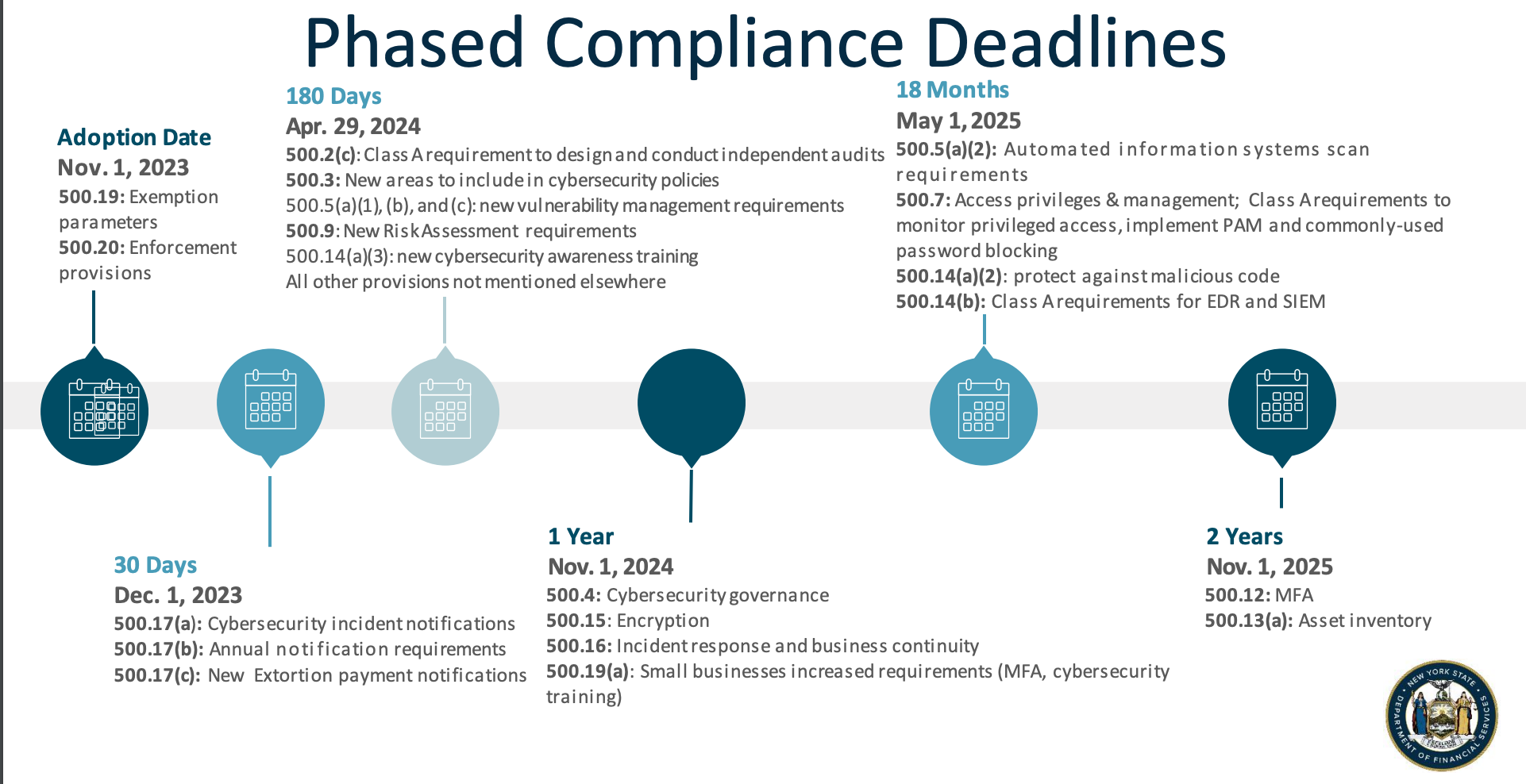
Compliance Timeline: Understand the compliance timelines and deadlines outlined in the regulations.
Impact on Business Operations: Assess the potential impact of the regulations on business operations and make necessary adjustments.
Resource Allocation: Allocate sufficient resources to implement and maintain a comprehensive cybersecurity program.
External Cybersecurity Assessments: Consider engaging external cybersecurity experts to conduct independent assessments of cybersecurity posture.
Collaboration with Regulators: Maintain open communication with the DFS to seek guidance and address any compliance concerns.
**Conclusion**
The NYDFS Cybersecurity Regulations play a vital role in protecting the financial services industry from cyber threats. CISOs have a critical responsibility in ensuring compliance with these regulations and safeguarding their organizations from cyberattacks. By implementing comprehensive cybersecurity programs, staying abreast of best practices, and collaborating with regulators, CISOs can effectively manage cybersecurity risks and protect the sensitive data and systems of their organizations.